What's in her name?

What's in her name (Salish Aire)?

Salish
from her new home the Salish Sea

Aire as in a melody of song.

Salish + Aire = The melody of the Salish Sea.

Salish Sea:
In the late 1700's Captain George Vancouver wandered around the waters of what are now known as British Columbia, Canada and Washington State, USA. He did the usual 1700's explorer thing and put names he chose on everything he saw. The names stuck and are recognized and used to this day.

New lines were added to Captain Vancouver's charts in 1872 (after a near war with Great Britain over a pig) which made waters on one side of the line Canadian and those on the other side of the line American.

It wasn't until 1988 (officiated in 2009) that someone finally realized that fish and various critters, (to say nothing of the water itself) were never involved in the boundary treaties and really ignored them completely. (This is best illustrated by the problems that Homeland Security has with Canadian Canada Geese and American Canadian Geese - it seems they refuse to carry passports and have been known to poop on the head of any border patrol person who tries to challenge their right to cross the border when and where they choose!) In reality the waters from Olympia to the well up the East side of Vancouver Island are pretty much one ecosystem.

The Coast Salish are the indigenous peoples who live in southwest British Columbia and northwest Washington state along the Salish Sea and share a common linguistic and cultural origin. The Salish Sea is named in honor of the earliest recorded peoples who plied her waters and learned to live in harmony with her.


Sunday, April 21, 2019

Stuck in La Paz


4-20-19


I often find it harder to start writing after I have “played hooky” for a while.  More out of embarrassment that I haven’t kept up than anything else (kind of like slipping on a weight loss resolution and then getting back into it).  My official excuse is that we kept hanging around La Paz and nothing much happened but that really isn’t true at all.  In any case all I can say is, “blog on!!”

First in the way of closing some stories from the previous chapter:

 I flew back up to Seattle for my younger brother, Tim’s, memorial service the beginning of March. It was a lovely service with an SRO crowd in the church he and our family had attended for many years. It kept making me feel a bit off balance when someone would introduce themselves who I hadn’t seen since they were Tim’s playmates in junior high school and they were suddenly middle aged.  It’s very clear that he had made an impression on a LOT of the kids he was in school with and been on sports teams with and that he had kept in touch with them in various ways. We were initially very upset that we had to delay the service because of the snowstorm but in hindsight it really was better as we all a bit more time to absorb the shock of his death.  As we work through his affairs we learn more and more about his life as an adult after he pulled away from our family somewhat.  He will always be missed by many more people than I had ever realized.

Frequently we have to just say, “It’s Mexico” when we hit a cultural barrier we don’t expect and that is exactly what happened with the Esparanza school.  We found out that our $US 1200 check had been accepted by the local bank who had to send it on to their Mexico City headquarters because it was “such a large amount” (we suspect anti money laundering rules may be part of the reason).  The headquarters said they would take a $US 300 fee!!!! to cash the check at which time the local Rotary in La Paz demanded that the check be returned as they could not see ¼ of the donated money go to overhead in good conscience.  On further review they learned that if instead we had donated two $600 checks they would be cashed without a fee so the original check was torn up and we wrote two $600 checks which were promptly cashed without problem.  The next issue was that friends we had known in Snohomish (now living in Florida) and staunch Rotarians had offered to match our contribution and we had hand carried a $1200 check from them which we now knew would not clear without a ridiculous (“It’s Mexico”) fee.  We contacted them and they agreed that if we tore up the original check they would send down two $600 checks with Carol and Charles who were going to see a new grandchild in the States.  NOW the good news: We received word that the national Rotary agreed to add $US 1000 to the pot and work has resumed on the school.  It is expected to be completed in time for the next term! 

Stucco is added over the rough block walls

Pipes are laid to the sewer tank

A lot of what happened since the past note was we continued to explore the islands, remote anchorages and villages north of La Paz so we could make the highly anticipated visit of our grandson, Etienne, and his mother Elise’s visit as enjoyable and varied as possible.

When I returned to La Paz from Tim's memorial service Mardi Gras was in full swing.  A parade runs first from one end of the Malecon to the other then the next night it goes the opposite direction and on Tuesday night it turns around and heads back for a final (almost) hurrah.  The final hurrah occurs the following week when the same floats are filled with children for the Children's Parade.


YouTube of La Paz parades (low resolution)


On one of my previous arrivals into the airport in San Jose Del Cabo I had taken photos of the maze one has to transit in order to get from the plane to the La Paz shuttle.  This includes going through a room filled with hundreds of people waiting to check in with immigration which itself takes only a couple of minutes.  The airport is rapidly expanding but currently experiencing severe overload in the early afternoon when planes are parked out on the tarmac and visitors shuttled in and out on busses.  Once through immigration you pick up your baggage and after letting the customs officer know if you have tobacco or liquor to declare.  If the answer is “no” then you are instructed to push a button and if you get a green light (so far we have only gotten green lights – knock on wood) then you are free to enter Mexico.  BUT first you have to pass two rooms full of taxi and shuttle drivers who are all trying to convince you that you are going the wrong way and that you really would be better to use their services.  Once past the gauntlet of shuttle drivers you exit the building and move on to looking for the correct shuttle company representative under the VERY crowded “umbrellas” (AKA awnings).  The company we use to go between La Paz and the airport has an agent with a sign under umbrella 5.  Once you find the agent the world gets better as he speaks excellent English and has the ability to put you on an earlier shuttle if you get out in time or a later shuttle if you got out later than you had planned (both of which have happened to us).  Elise and Etienne arrived at a very busy time but using our guide photos and getting a green light they were able to get to the shuttle an hour before we expected and were put on an earlier bus which made everyone happy.


Immigration waiting area La Paz airport
"Umbrellas"

La Paz shuttle representative 

Etienne’s high school Spanish class has an extra credit opportunity for students who visit a Spanish speaking culture during the term and so we had planned to give him as many cultural learning opportunities as well as amazing scenery opportunities as possible during his stay.  Once off the shuttle van he and his mother were immediately swallowed up in a holiday crowd as there was a huge bike race being staged down main street in front of the bus station.  We then walked to the boat and deposited luggage before heading to a restaurant at the head of the dock for dinner.  I instructed the waitress that Etienne was in school for Spanish and if he didn’t order is Spanish without help he would not get fed.  She laughed and helped with his learning experience.  I have to say he immediately demonstrated that he has learned a lot in his Spanish lessons and continued to help us with translation throughout his visit!

Etienne and Elise

The winds were cooperative while they visited so after spending two days introducing them to “big city” La Paz making sure we visited everything from the street vendors to the bigger stores as well as the Gringo community, we headed out to the islands but not before we paid a tour operator to take us snorkeling with whale sharks.  For the past couple of years whale sharks have chosen to bear their young in the waters just outside of the peninsula that protects La Paz Harbor.  The locals have instituted a very strict plan for snorkeling with the juveniles which requires that you ride on a licensed guide boat.  We were able to swim with two of the fish (whale sharks are the largest fish (NOT whales/mammals)and filter feed from the plankton rich waters).  We all decided that the experience was well worth the costs and tipped the guides well after they went out of their way to help water-timid Etienne have a great experience. 

Swimming with whale shark

On our way to the islands Elise was totally delighted when a pod of dolphins swan a couple of feet from our bow long enough for her to catch a video of them.  We visited a number of our favorite anchorages and made it as far north as tiny fishing village of San Evaristo where Etienne could get a chance to be immersed in rural Mexican culture for a short time. After a week that went very quickly we waved good bye as they headed back to the airport on the shuttle van so they could return to the clouds and rain of Portland Oregon.


Elise in her favorite spot on the boat

We had planned to head out as soon as they left but recognizing we needed a few days to provision and upon learning that the cruisers’ club would do their annual Bay Fest the next week, we stayed on in La Paz for a few more days.  We also were taken up on our offer to do a presentation on cruising to and in Alaska which was well received.  We will post the link to the PowerPoint program here http://ncgregory.larper.com/Chapter-Pages/Cruising%20to%20and%20in%20Alaska.pdf .

As I write this we have just moved north of our previous most northern exploration within the Sea of Cortez when we pulled anchor at the village of Agua Verde this morning.  We have “joined” an informal group of friends that have gotten to know each other as we move along.  Tom, Sandi and kids we met when we moored directly off of their bow on the way south in the port of Dana Point only to learn that Tom is a Physician’s Assistant who had practiced at the same hospital where I worked as an RN (we were both there at the same time but don’t recall meeting previously).  We met 9 year old twins “Isle” (pronounced with a silent s, as she is quick to point out) and Lily on the dock and at the cruisers’ club in La Paz and they live aboard the boat Saare Lill which translates into “flower island” so it is named after the girls.  Habe Hoba and Habe Hoba II are slowly working their way north as well where they hope to sell Habe Hoba which has been their home for the past three years but is now protesting the plan with engine breakdowns and other maritime pouting.  In any case we have lots of time to get to our eventual goal at the very north end of the Sea so instead of staying for a night at most in an anchorage we are often staying for several days and taking time to explore.

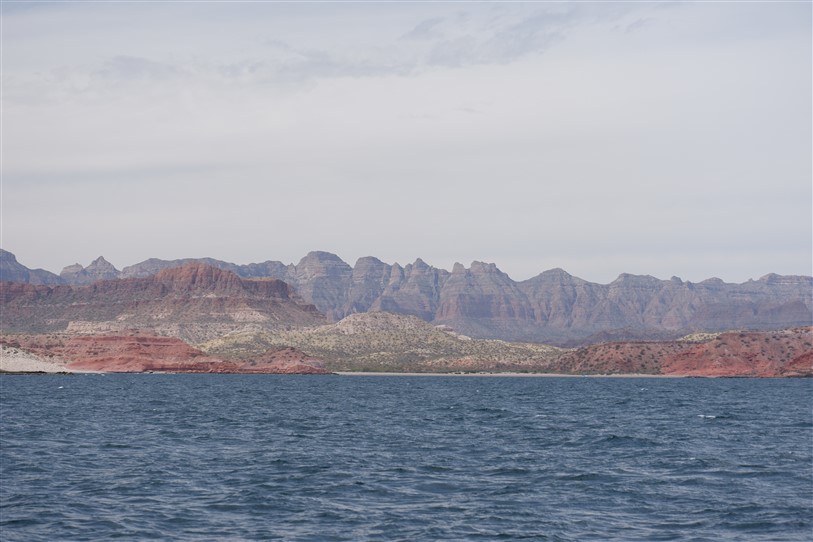
Our explorations include diving in ever increasingly beautiful dive sites, visiting the villages and trails on shore, and taking time to watch a whale shark swim around the bay collecting its diet of plankton.   As we move north the islands are becoming more common and the Baja mountains steeper and more scenic.  All we can say is that everyone who has been north in the Sea reports it is “amazing”.

Clarice here – I decided to add a little entry to this latest update. We’ve worked hard on keeping the bottom of the boat clean as the sea growth occurs quickly in these southern waters. Also realized one of our Ultrasonic hull cleaner transducers had separated and thus was not performing. We’ve reattached it and will see if it helps keep the “garden” on the keel cooler a little less abundant.

Norman taught me how to splice Dyneema so that makes me pretty happy. We realized we needed to replace the straps on the sling we use to lift the dinghy to the upper deck when one decided to break abruptly ( not while raising thank goodness) and another one was almost cut through one layer. We made a nice Dyneema hoist system so hoping that will last a little better.

We’ve done a lot of “work” dives on the bottom of the boat, but now we are doing some fun dives. We went to a pinnacle outside of Agua Verde and dove while a friend tried to spear fish. We stayed around 35 to 40 feet and saw huge schools of fish – Beautiful Cortez Angel Fish, Sargent Majors, Parrot Fish, Cortez rainbow wrasse and multiple others. Circled the whole pinnacle and it was beautiful. The coral is present, but bleaching. Multiple fans were present as well.

Fresh fruit and fresh variety of produce is becoming more difficult to find in the fishing villages. I’m working to be creative with the meals to keep from eating getting boring.

Jarvis has decided he is going to be highly anxious when we run the generator or wing engine. He doesn’t like rolly anchorages, but then neither do we. He also gets stressed out when we get the dive gear set up…some of these are new anxieties, but we’ve noticed his age is showing more and more. He appears to have some arthritis in his hips and aspirin helps that.

It’s getting more and more remote as we venture farther north. The water is sort of warming up, finally. Love the clarity of the water – it’s fun to be able to check your anchor from the surface.

Just some final notes on how things are going after nearly 6 months in sun and warm water:

Clarice already commented on Jarvis getting more nervous with engine noise and boat movement.  I think he dislikes rocky anchorages even more than I do.  We have also purchased rubber shoes for him to see if we can reduce the number of burrs he picks up and other injuries to his foot pads from sharp rocks and shells when we take hikes.  Finally we have not yet tried his new carry sling but since he is very eager to go hiking with us but sometimes tires out and needs to be carried home we are hoping it will help.

Clarice also mentioned our bottom cleaning woes.  In the Pacific Northwest and Alaska we would clean the bottom of the boat every 2 – 3 months whereas in these warmer waters we need to do it every couple of weeks.  We are learning to stay ahead of the harder to remove growths by checking places where the growth starts frequently while a brush with a dive glove is enough to disrupt the growing garden patch (any unpainted metal fittings such as intake ports, keel cooler and propellers seem to be the quickest to start showing growth on them).  Our new favorite tools for removing the scum that develops on the hull is a pair of stainless sheetrock knives from Home Depot.  The scum peels off in sheets but releases hundreds of krill into the water that seem to be attracted to our wet suits for some reason.

We have read that in this part of the world your water maker will become one of your most used appliances and we are finding this to be true.  Ours requires that we be connected to shore power at a dock or running the generator.  At 25 gallons an hour we seem to need to run it for a couple of hours every few days.  Our sailboat friends can’t imagine using that much fresh water but since we have fresh water flush toilets, fresh water showers, rinse the anchor chain with fresh water, etc.  we use a lot that we don’t have to in survival mode but once again we remind ourselves that we chose to make this our house rather than “long term camper”.  Most marinas don’t guarantee their water is safe to drink so even sitting at the dock we fill our tanks from our water maker.  Our other choice is to fill the tanks and add a tiny amount of bleach but chlorine is a threat to the water maker membranes and we have gotten used to the very pure taste of the water we produce ourselves.   We are concerned about the age of our water maker and have replaced and upgraded a number of parts already.  The good news is that it is made up of parts scattered under our bed rather than a single unit so we can replace and upgrade pieces more easily.  The bad news is that when it was built the membranes that are the heart of reverse osmosis water makers were all priority to each manufacturer whereas the new ones are more generic.  We believe our membranes were last replaced in 2009 which makes them about 10 years old and beyond their expected life span.  Replacing the membranes will mean we need to change the high pressure vessels to ones of standard size and this one-time costs is about $1000 total for the two vessels we will also need two membranes at about $200 each.

We are also starting to see how quickly fabrics and ropes fade and deteriorate from sun and constant motion.  I’ve also joked about trying to make money selling sea salt made at sea by scraping the layer of salt that coats everything whenever we transit rough water.  This is especially frustrating for Clarice who takes any substance other than boat wax on the hull to be a personal affront and requires scarce fresh water to make it completely go away.

Overall we are loving the weather.  Virtually every day is sunny with temperatures in the 80s.  We are both quite tanned and getting used to wearing wide brimmed hats, avoiding walking in the heat of the day, and drinking a lot of fluids.

Since we seem to have reasonable internet here in Puerto Escondido we will stop at this point and get this posted. 

Remember we love to hear from readers (NOT advertisers trying to get free press!!) so please leave a comment or send us a message at salishaire@gmail.com.

kayaking mangroves on isle San Jose

kayaking mangroves on isle San Jose

Our friend from Korvessa (red dinghy) and Saar Lil

Beach at Gato Bay

Landing the dinghy

Beach at Escondido

Jarvis exploring with kids from Saar Lil and Habe Hoba

Clarice adds more shells to her collection

Boat kids exploring tide pools

Boat kids exploring tide pool


Sunday, February 24, 2019

A wild start to the New Year!


(Since it is tax time we are looking back over last year’s cost-of-living  and decided to write a side paper describing what we have learned click here or go to the side column to read about what we learned in our first full year of cruising full-time.)

It’s been a bit of a wild time since our last blog was posted just after Christmas with one planned trip to Seattle and a very unexpected death in my family leading to another unplanned trip to Seattle. In the mean time we have been exploring La Paz and had time to get a small taste of the surrounding countryside both on and off-shore.

La Paz has been our base for a month and a half now and we are quickly realizing why it has a reputation as a place where cruisers get “stuck” as it has a very large and active expat community of cruisers who have done a great job of making themselves welcome in the local community.  The town is pretty middle class and feels very safe.  As long as we are courteous the local folks work very hard to help us find what we need even though our Spanish is pathetic.  All and all we “get” why several cruisers haven’t moved their boats in 10 years.  With that said I will divert to a couple of events of the month and then end the blog note with impressions of La Paz.


Knowing that we have two parents in their 90’s we both feel we need to get back to the Seattle area periodically with the knowledge that “this visit may be our last”.  We had a serendipitous set of events occur the final week of January that allowed us to travel north from the 23rd to the 29th during which time the Seattle Boat Show and Nordhavn Seattle Annual Get-Together just happened to occur.  First was a low point in travel after the holidays which also meant that our ticket prices dropped and by using an about-to-expire companion fare we were able to travel affordably. Second was a friend’s mother was coming to La Paz from Seattle during the same time period and a) she needed a place to stay as his boat was too crowded, b) she has spent lots of time on a trawler before so she was used to the accommodations,  and c) she likes dogs.  The result was that while we were in Seattle Max’s mother and daughters were thoroughly spoiling Jarvis while they enjoyed the space of our boat AND we knew that the boat and dog would be safe until we arrived back aboard.  (It even worked out that Max was able to rent a car to take his mother the 3 hours to the Cabo airport and pick us up from our flight in one trip!)


Flying out of Seattle after our whirlwind New Year's visit [looking west with Bellevue in the foreground towards Mercer Island and the University of Washington]

Flying out of Seattle after our whirlwind New Year's visit [Mount St Helens and "New" Spirit Lake]

Flying out of Seattle after our whirlwind New Year's visit [Mt Hood]

When we planned for a week up north we thought it sounded like a lot of time but by the time we landed at the Seattle airport we had every minute planned ahead.  We got to visit Clarice’s best friend of many many years when we camped out in their camping trailer in their back yard.  We were able to visit a number of our Snohomish County friends and my old Providence Hospital friends while we were up that way.  Snohomish County is also where Clarice’s dad and siblings live so we visited them as one of the main goals of the trip.  Then we visited the Seattle Boat Show and Nordhavn get-together on Saturday.  The boat show is always fun as we look to see if there are new “toys” that we could use in our home in the future but the highlight for us is the Nordhavn get-together sponsored by the Seattle Nordhavn brokerage and the Nordhavn Company.  At the get-together we enjoy meeting with other owners that we have met before in-person and to put faces with owners we only know from the internet.  Two of the interesting people we met were James and Jennifer Hamilton who are the third most travelled Nordhavn owners having put 70,000 NM under their keel (remember the earth is only 25,000 NM in circumference).  James has done this while he maintains a very high level position with Amazon as he works remotely from his boat while he travels.  He also got one of the very very rare Nordhavn  “high latitude” pennants for going to the far north or south. (MV Dirona Blog) A major Seattle highway was shut down just before we arrived while final preparations were made to open the new tunnel under the city.  Knowing that this closure of a major traffic route was expected to cause major slowdowns in a city known for lousy freeway traffic anyway, we headed south after the meeting ended and spent the night in our grandson’s mother’s tiny house overlooking Alder Lake near Mt Rainier.  Since our brains are used to waking in the Central time zone we were up before the sun and enjoyed an amazing view of a starlit sky above just visible mountains across the lake with everything below us shrouded in fog.  We headed out early and were able to have breakfast with Norman’s brother and his wife that live in SW Washington before heading into Portland to visit with our son and his wife and our grandson and his mother.  Finally we headed back north and stopped in Tacoma for a nice visit with Norman’s mother and his sister and some of her family. By the time we were back on the boat we were exhausted from our “vacation” and glad to be home with plans to head out after a day of provisioning to explore the islands and towns north of La Paz during the month of February.

We had just returned to one of our new “favorite anchorages” on Isla Espiritu Santo and were starting the time of exploration we had been really looking forward to when, as they say, life got in the way.  We had anchored the night in a cove with no cellular service and awoken to a lovely morning. It was February 2nd, Groundhogs Day. After taking Jarvis ashore for a walk we decided we would move to a different cove we had passed coming from La Paz and go SCUBA diving.  We weighed the anchor and headed out of the cove and around the point and were about to enter the cove where we planned to dive when my phone tinkled with a text message and then immediately indicated “no service” again.  The message was: “Norm? This is Tim’s [my 50 year old younger brother] girlfriend.  He collapsed at my place. Paramedics brought him to St Joe’s.  They are admitting him to ICU.” – and thus began a very sad tale. Initially we tried getting messages to other family members via our satellite messenger device and the ham radio Mariners net.  Just as the message reached my older brother from the ham radio connection we entered an area of more consistent cellular coverage as Clarice had turned the boat back towards La Paz.  We learned that Tim had entered ICU the night before in a coma and that his girlfriend could only find our phone number so we were the first of his family to know of the crisis even though we were in Mexico bobbing around in the Sea of Cortez.  Before long the ICU nurse spoke to me with the words every nurse understands, “come NOW”.  To make a long story short; while Clarice drove the boat “at flank speed” towards La Paz I arranged for a ticket from Cabo to Seattle, spoke to another boater who I knew had a car (and a good heart) about the need for an emergent ride from La Paz to the airport 3 hours away who immediately offered to help, and arranged for a crew to help Clarice the last hour from the entrance to La Paz Harbor (where I caught my ride to the airport) into a slip she had been able to arrange in town.  By 9 PM Pacific time I was at my brother’s bedside and even though he looked like so many people I have cared for on life support who later woke up and smiled, I knew he was brain dead after a hemorrhagic stroke and his body was being “preserved” so that others could benefit from his healthy organs.

Timothy Collins Gregory
August 9, 1969 - February 2, 2019
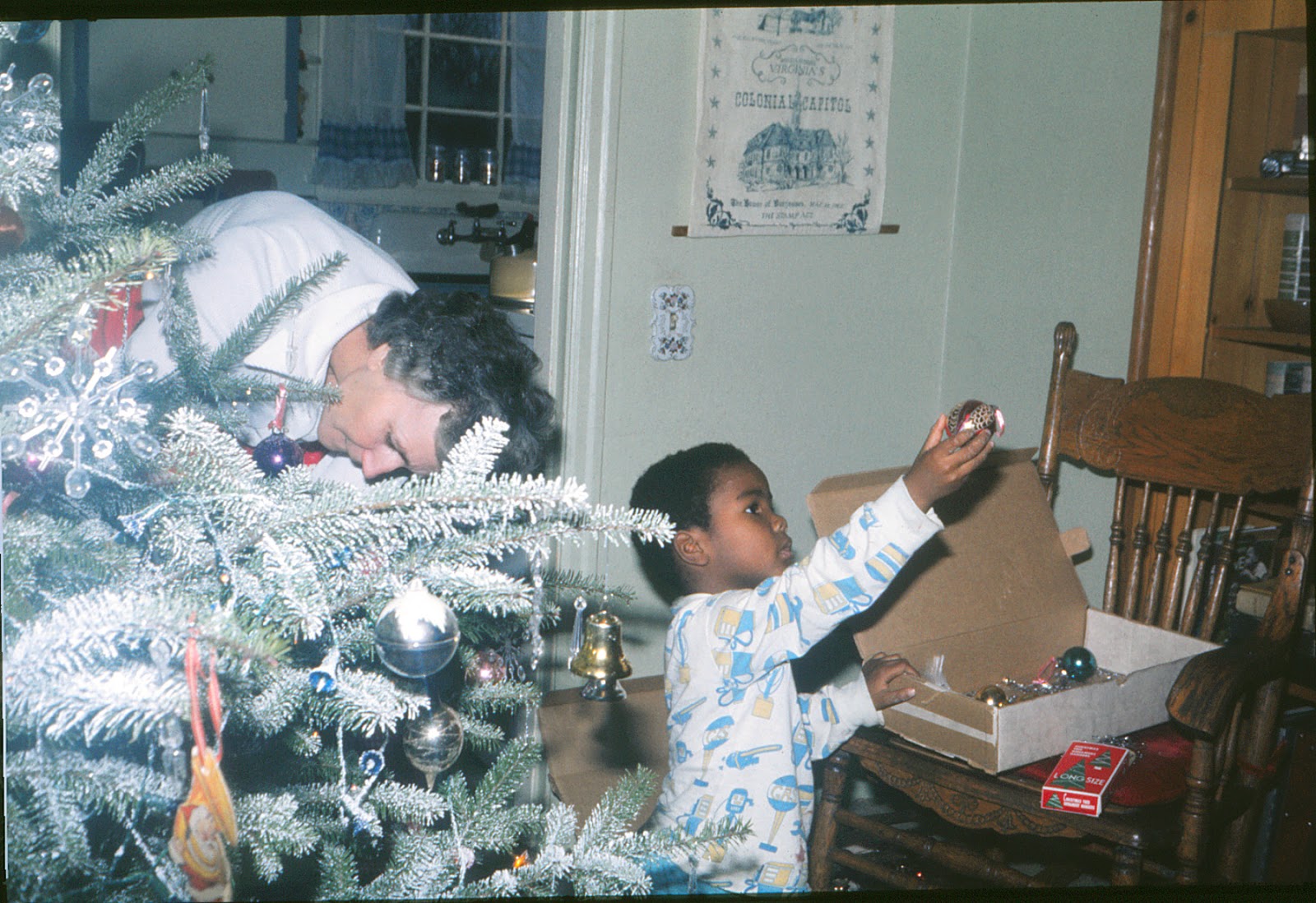
 Tim was a few days old when he was left on the hospital steps by a birth mother who for whatever reason knew she could not care for a premature infant.  We know he has dark skin and have always referred to him as “black” without really knowing his genetic heritage. He came to us as a foster child only to worm his way deep into our hearts and we chose to adopt him.  I was 12 years old at the time and Tim was the little brother I had always dreamed of.  He was good looking, a natural athlete, and his personality quickly made people drop their prejudices about black people.  Friends over and over commented how Tim made those around him happy with his natural laughter and sense of fun and general love for people.  I’m still coming to grips with his being gone.  Our 92 year old mother is devastated as Tim was “her baby” even though he was 50. We had hoped to have his memorial service on the following Saturday so that I could get back to Clarice in La Paz as quickly as possible when life got in the way for a second time and a major snow storm hit Seattle.  We delayed the memorial and I was able to fly out before the snowflakes flew but now a third trip is in the planning for the end of February so I can help close his affairs and attend the memorial.


Tim and Mom decorating the family Christmas tree (year unknown)


Back in La Paz we have come to enjoy walking the streets as each corner seems to bring a different perspective.  With a Sears store and other specialty stores next to street vendors selling everything from food to jewelry.  Often private homes are behind wrought iron gates but some of the entries and gardens make it clear the owner is proud of their dwelling. Busses are everywhere and range from very fancy inter-city buses to converted school buses operated as a private collective throughout the city.  Most stores and restaurants will politely let customers use their toilets but it is still common to see an expectation that you pay the person servicing the toilet 5 or 10 pesos as is common in Central American countries. As I walked around I asked a number of people if I could get their photos as “typical Mexicans” some seemed suspicious of my motives and said no but many agreed.  It feels like we are getting repetitive but the local Mexican folks are as a whole very very friendly and outgoing and it is clear that families are cherished.  Since we haven’t become familiar enough with the location names to make use of the bus system we have learned that Uber is very inexpensive and there is usually a driver within a couple of minutes of us when we signal we need a ride (and many of the drivers speak good to fluent English).

La Paz Harbor

Family spending a day on the beach

One of many statues this one is "Paraiso del Mar" ["Paradise of the Sea"]

This statue, "El Viejo...y el Mar?" ["The Old Man ...and the Sea?"] always reminds me of my father who would join in any children's games if it made the children happy.  If he had been asked to wear a paper boat and a paper hat and it made children smile then he would have happily done it with a smile on his face.

A family on the Malecon [seaside walkway]

This man is out every evening selling his blow-up toys to the kids who seem to get a great deal of enjoyment from them.

One of several mini-cruise ships ("National Geographic Explorer" I think) that land in downtown La Paz (Larger cruise ships have to land at the entrance to the channel as it is fairly shallow into town) 

La Paz sign and another sculpture on the Malecon

La Paz side street with several cafes


As in most Central American countries it is not uncommon to be asked to pay a small fee to pay for cleaning and supplies of public toilets
La Paz Sears


Lots of quinceañera dresses on display

La Paz cathedral

Nuns selling home baked goodies outside of the cathedral

Lots of zapaterias [shoe stores]

Private homes are behind fences but often have fancy courtyards and entryways

A peddler with food to sell

Buses are private but are very very common

Another street food peddler

Peddlers selling snacks to kids as they leave school

I asked a number of people if I could get a photo of "Mexicanos ordinarios" [ordinary Mexicans] some turned me down but many were happy to help out

Mexicanos ordinarios

Street side shop

Sidewalk shop

Sidewalk shop
Mexicanos ordinarios


One of many many food stands (often only open for 1 meal a day)

More quinceañera and wedding dresses on display

Clarice asked that I be sure and get photos of some of the murals in town
Mural on a building


Another mural
My favorite ice-cream shop

Ice-cream shops are very common and all serve lots of flavors

Enjoying their ice-cream

Mexicanos oridinarios enjoying helado

Lots of manual laborers keeping the Malecon tidy

We continue to get a 'cultural slap' when we walk on the sidewalks which are on many levels.  Our understanding is that each property owner designs and builds the sidewalks the way that they think works best for them. (notice the sudden drop of about 16 inches just beyond the tree so a driveway can cut through the sidewalk).
Eclipse of the moon from La Paz January 21, 2019

We were able to talk a fellow cruiser and his wife into taking us inland while they helped deliver school supplies on behalf of the Bahia de La Paz Rotary Club to a rural pre-school and while they were there they showed us an unfinished secondary school.  The pre-school was not in session as the teacher was in La Paz for a teacher education day.  We were very impressed with how the teacher had been able to turn a building constructed out of discarded shipping pallets into an effective classroom.  The Rotary presented them with a water cooler that they had converted into a water filter which was effective enough that they have been shown to significantly decrease the incidence of waterborne disease when they are used, and also left some school supplies and educational toys.  The story of the secondary school is that the Mexican government has a rural schools support agency that takes young adults who have made it through high school and then gives them a year of teacher training.  They are then sent to a rural area where there aren’t enough students to justify a regular school and they teach for their first year to pay off the teachers’ training while the local community makes sure they have a place to live and are fed.  They are encouraged to stay on and teach beyond the first year with the offer that they will earn further education for themselves.  Another advantage of this system is that it supports bilingual teachers in indigenous villages where Spanish isn’t spoken.  On the other hand if there is not a building for a school then the kids are sent to a neighboring boarding school away from their family and village.

Preschool made of surplus shipping pallets

Rotary brought supplies for the preschool

2 children were playing with a newspaper in the wind so we fashioned paper hats which made them very happy

Esperanza secondary school in need of money to be finished
Esperanza Village has the walls and roof in place for a school for the 10 local secondary students but the money is not yet there to finish the structure.  The local Rotarian familiar with the school tells us that only $US 3000 is needed to finish the floor, add windows, etc..  We have set out to try to find $US 5000 so the school can be completed and furnished. So far we have given check for $US 1200 to the Rotary Club and have another $US 1200 pledged . If readers would like to help out the club has a new web site (February 24th update: not yet posted) with a PayPal donation option (PayPal does not take a fee from the non-profits for donations) and donors can indicate the money is for the Esperanza School.  We would also like to note how warmly we were welcomed when we visited the Rotary Club despite being outsiders who did not even speak the language.

Bahia de La Paz Rotary club

Accepting donation check

Small world side note: Our contacts with the Rotary Club are Charles and Carol Moorhead.  When I needed an emergency ride from La Paz to the Cabo airport about 100 miles away it was Charles who jumped in and made sure I caught my plane.  While I was riding with Charles I was texting my brother-in-law in Tacoma to arrange for him to pick me up in Seattle. I mentioned to Charles that my brother-in-law had been a computer geek back in the Fortran days for Weyerhaeuser Company to which Charles indicated he and Carol had worked in Weyerhaeuser IT during that same time period.  When we compared notes Charles, Carol, and my brother-in-law all knew each other from working together.

Much of our travel in the Sea of Cortez is ruled by the north winds.  When a high is over California swirling clockwise and a low is over Arizona swirling counter clockwise the wind between then heads down the Colorado River valley and on to the Sea of Cortez.  The speed of the wind is not the issue but rather the short choppy waves the wind raises very quickly once it hits about 15 knots (which it does frequently).  Traveling north with these choppy waves can be miserable as the boat thunks along (the local term for this wave pattern is “a herd of buffalo” with describes the scene pretty well).  Yesterday the winds settled and are predicted to stay calm until the weekend so we headed north to Isle de San Francisco.  The bay where we are spending several days is so scenic that it was chosen as the cover photo of Sea of Cortez: A Cruiser’s Guidebook byBreeding and Bansmeer .  There seems to always be something to do and watch as one day Jarvis and I climbed the rim of this caldera, another we walked across a salt flat to the other side of the island, and Clarice has enjoyed swimming to the beach and back.  The bay is filled with thousands (if not millions) of fingerling fish that constantly jump and churn up the water and attract pelicans who dive for them and dolphins who fish for them as well as local fishermen who use hand nets and jig lines to catch them for bait.  When we arrived we were one of only about 4 boats but with the fine weather several other boats have arrived including a mega yacht and a micro cruise ship from the UnCruise Company.

A sampling of our photos from the islands and villages 
north of La Paz as far as Bahia Aqua Verde


Village school St Evarista Village

Roadside shrine in a natural rock grotto

Salt evaporation ponds San Everista Village

Fresh Sea Salt 

Fresh water plant San Everista Village


Norman and Jarvis enjoy morning coffee


Moon set at sunrise

Sierra Gigantica Mountains
Please enjoy the video below featuring the pelicans of Isla San Francisco

Video: (YouTube version - lower resolution, faster streaming) The Circle of Life on Isle de San Fransisco

Video: (MP4 version - higher resolution) The Circle of Life on Isle San Francisco